
Drywall Finishing in Fort Myers & Lehigh Acres, FL
Taping, mudding and sanding are where a wall becomes smooth. We take hung board to a surface that holds paint evenly, so seams, screws and corners disappear under the light.
- Tape, mud & sand
- Level 4 and Level 5 finishes
- Ceilings and tall walls
- English y español
The craft behind a wall you cannot see the seams in
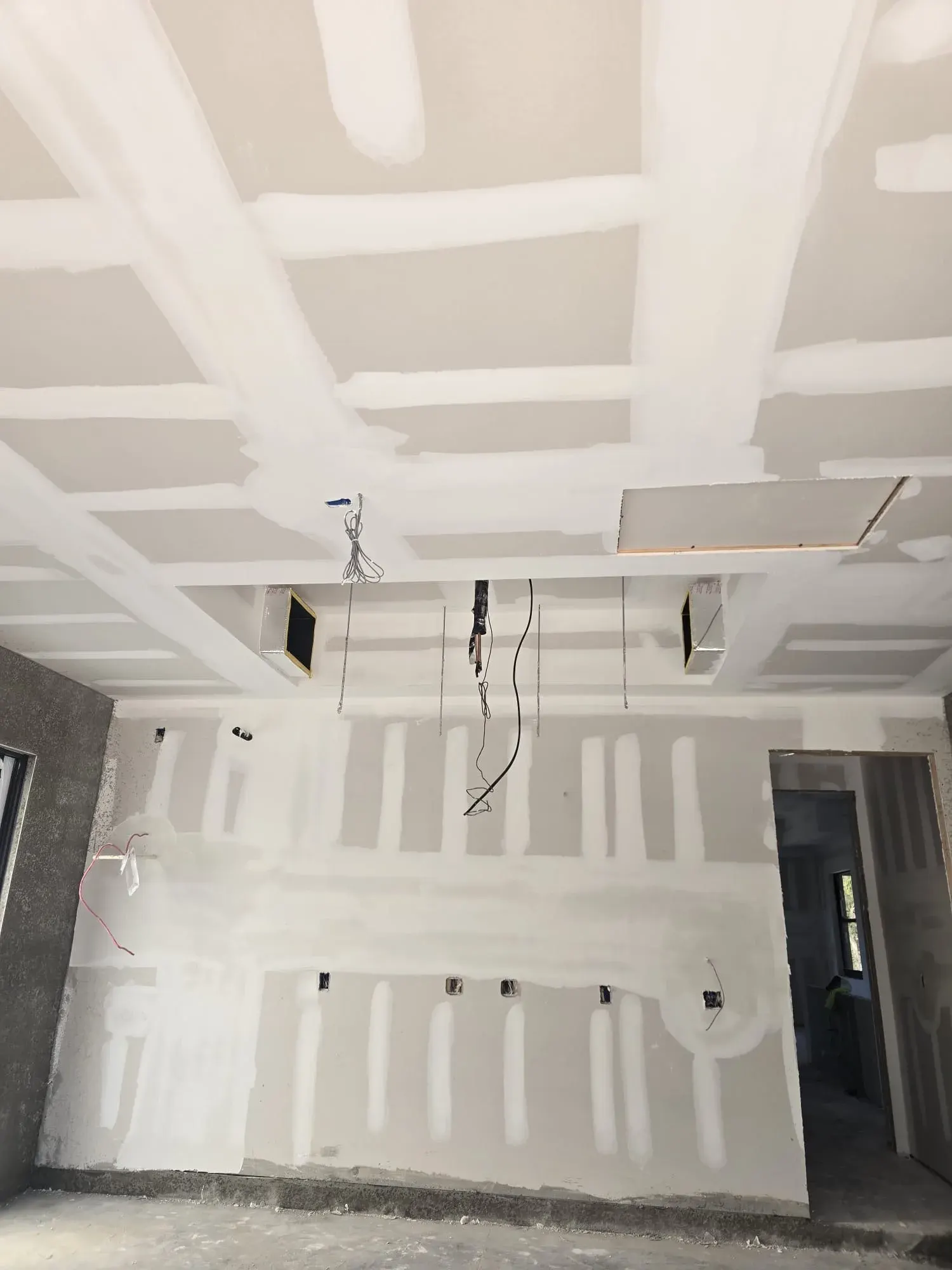
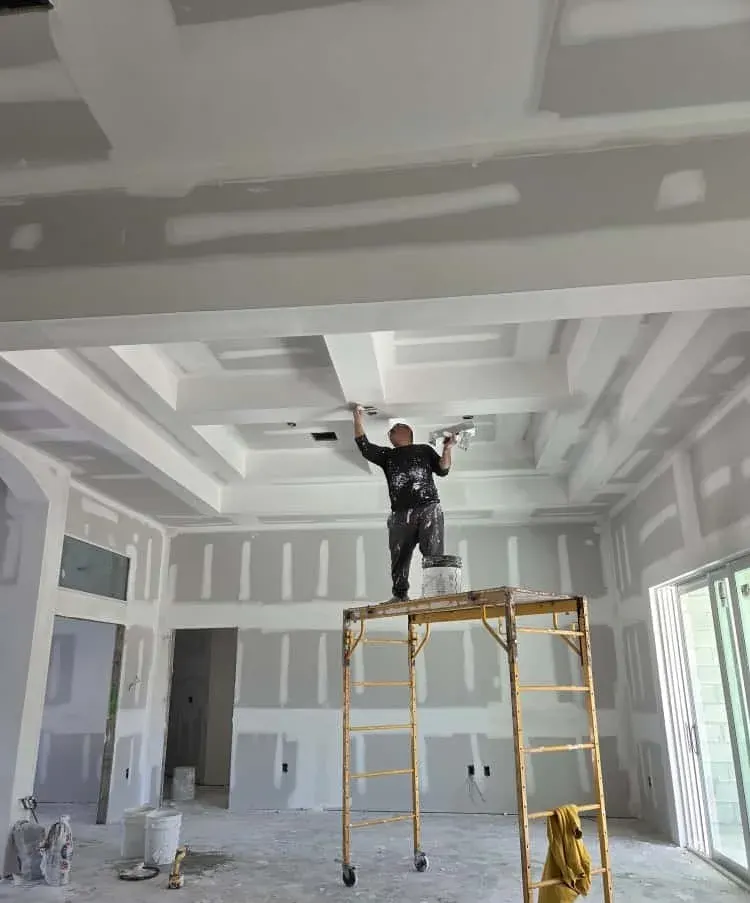
Finishing is slow on purpose. A skilled finisher spreads compound in thin coats so each one dries flat, then sands only what needs to come off. The photos on this page show the middle of that process: pale bands of compound over taped seams, patches around screws, bedding coats on walls and ceilings that look streaky until the last coat lands. That patchy look is a sign of work in progress, not a flaw.
The goal is a surface that looks identical to the eye whether you are looking at paper, a taped seam or a screw head. That takes control over thickness, edges and sanding pressure, and it takes a proper reading of the light. Flaws that do not show under overhead work lights can jump out under the afternoon sun coming across a wall.
We finish what we hang and we finish other crews' board, in walls, ceilings, stairwells and the layered ceilings that show every mistake. Texture, if you want it, comes after.
When a job needs finishing, not just painting
A coat of paint covers color, not craftsmanship. These situations call for finishing work:
Board is hung but the walls are bare
Right after the hang, every seam, screw and corner is exposed. Nothing should be painted until it has been taped and coated.
Seams or tape lines show through paint
A line you can see where two sheets meet means the joint was under-finished or the edges were not feathered wide enough.
Tape is bubbling or peeling
Blisters in the tape mean it was not embedded fully or the compound dried too fast or too humid. The failed section has to be cut out and redone.
Corners and bead are chipped
Outside corners take impacts. Chipped bead and open corner joints need to be reset and recoated, not touched up.
Strong side lighting shows ripples
Large windows and low-angle sun reveal tiny surface differences. A skim coat to Level 5 evens the whole wall.
A remodel opened up walls and ceilings
New openings, moved walls and removed soffits all leave seams that tie into existing surfaces and need blending.
How we take hung board to paint-ready
- Check the hangWe look for proud screws, torn paper, open gaps and crooked corners before any compound goes on. Problems are cheaper to fix now.
- Tape and embedPaper or mesh tape goes onto every seam with a bedding coat of compound, and fastener heads and corner bead are covered.
- Second coatOnce the first coat has dried, a wider coat fills and flattens, feathering past the first band so the edge disappears.
- Final coatA thin, wide finish coat takes the surface to a ready state. On Level 5 jobs a skim coat goes over the entire surface.
- Sand, inspect under lightWe sand until smooth, then check under raking light, because that light tells the truth about a finish.
- Prime or move to textureThe wall is ready for primer or for the texture you chose. Texture applied over a well-finished wall looks even.
What drives the price of drywall finishing
Every project is different, so we quote after we see the job. The big factors:
Total surface area
More wall and ceiling means more tape, more coats and more sanding.
Level 4 or Level 5
A skim coat over every square foot is a real step up in labor. Level 5 is worth it where gloss paint or hard light will show everything.
Number of joints and corners
Coffered ceilings, arches, bulkheads and many small returns have far more edges to finish per square foot than a plain box room.
Ceiling height
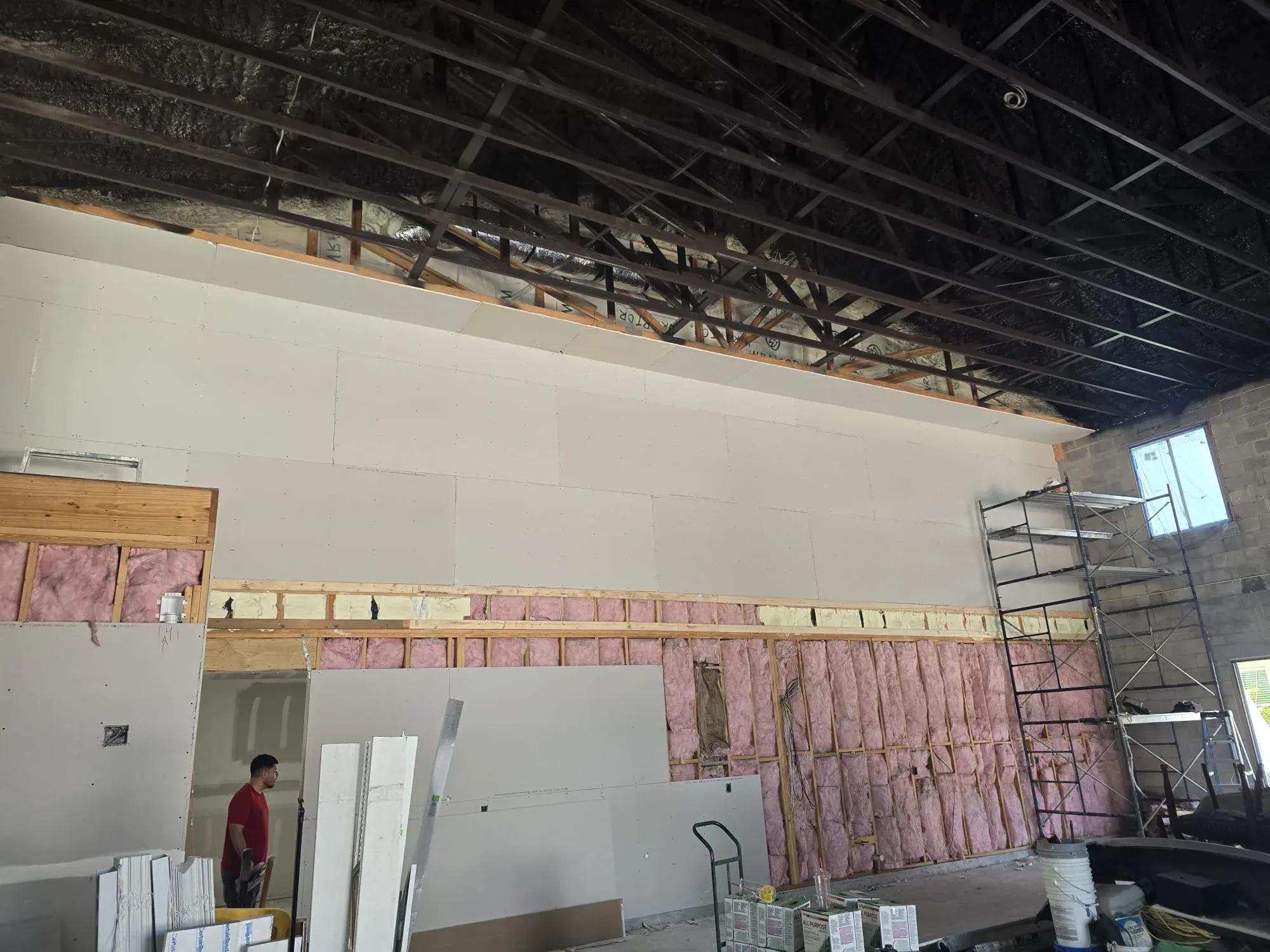
Tall walls need staging and extra time to reach and sand safely.
Dust and containment needs
Occupied homes call for more masking and cleanup than an empty new build.
Texture afterward
Texturing is a separate step with its own materials and timing; tell us up front if it is part of the job.
Why choose us for drywall finishing
We built our name around three words: hang, finish, texture. Finishing is the middle one and the one that decides whether the final paint job looks like a model home or a rental.
You can ask us what level of finish we recommend for the paint and light you have and get a straight answer, in English or in Spanish.
- Finishing is a core trade, not an afterthought to hanging.
- Experience with layered ceilings, tall walls and taped joints throughout whole houses.
- Honest advice on Level 4 versus Level 5.
- Hang, finish and texture available from one crew.
Finishing drywall across Lee County
From our base in Lehigh Acres we finish drywall for homeowners and builders around Fort Myers and the rest of the area. Humidity is the main local variable, which is why we plan coat timing around the weather and the air conditioning. See Lehigh Acres for more on building in that area.
Questions people ask us
What are drywall finish levels, and which one do I need?
The industry grades finishes from Level 0 (no work) to Level 5. Level 4 (tape, three coats of compound and sanding) is the usual standard for walls that get flat or matte paint. Level 5 adds a skim coat over the whole surface and is chosen for glossy paint, strong side lighting, or walls with long windows. The right level depends on the paint sheen and the light in the room, so we ask about both.
How many coats of joint compound does a wall get?
Taped joints get an embedding coat that sets the tape, a second coat that fills and widens, and a final thin coat that feathers out, with fastener heads and corner bead covered in the same passes. Each coat has to dry before the next, which is why a finishing job takes several visits instead of one.
Why does my wall look blotchy and patchy halfway through finishing?
That is normal. Fresh compound dries from gray to white in patches, which is why the in-progress photos of drywall jobs look streaky. It does not mean the finish is bad. Once everything is sanded and primed, the surface evens out.
Does Florida humidity affect drywall finishing?
Yes. Compound dries slowly in damp air, and a wall finished while the house has no air conditioning can raise paper fibers or cure unevenly. We prefer the AC running during finishing so the compound dries on a predictable schedule.
How dusty is drywall sanding, and how do you manage it?
Sanding joint compound makes fine dust. We contain work areas with sheeting where it makes sense, sand with dust-reduction in mind, and clean up before we leave. Rooms still occupied during the work should have vents covered and belongings moved or draped.
Do I need primer before painting new drywall?
Yes. New compound and bare paper absorb paint at different rates, and unprimed joints show through as dull stripes. A coat of drywall primer evens the surface so the topcoat looks uniform. Our interior painting page covers the next step.
Got board hung and ready for finishing?
Tell us how many rooms, the ceiling heights and the paint you plan to use, and we will tell you what level of finish makes sense.
- Se habla español: llámenos al (239) 410-4536