
Water-Damaged Drywall Repair in Fort Myers & Lehigh Acres, FL
Wet drywall does not recover on its own. We cut out the damaged board, rebuild the wall or ceiling, and finish it so the repair does not show once the leak is fixed.
- Walls and ceilings
- Flood cuts and rebuilds
- Finished and texture-matched
- Call now
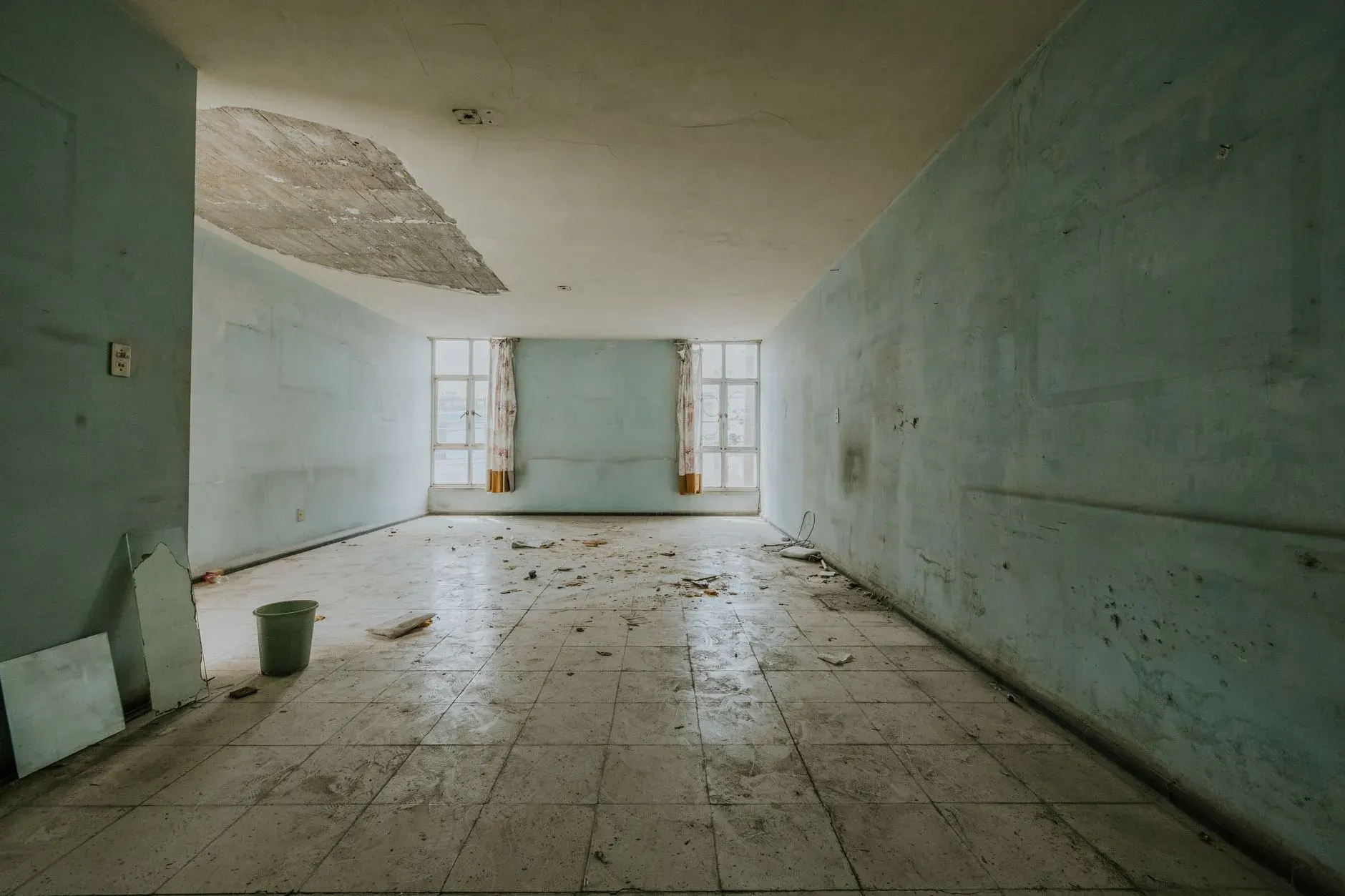
First stop the water, then rebuild the wall
Drywall is paper and gypsum, and both do badly when wet. Soaked board sags, softens and stains, and the paper face becomes food for mold. Once that happens, painting over it only hides a problem that keeps growing behind the surface.
Our job is the rebuild. We remove the damaged section back to dry, solid material, replace it with new board and bring it back to a paint-ready finish. Before that, the water source has to be found and fixed, and the area dried. A repair done over a still-leaking wall will be wet again.
Southwest Florida has its own water problems: afternoon storms that find roof flaws every summer, air conditioners that leak into attics and ceilings, and flooding from hurricanes such as Ian in 2022, which put water inside homes across Lee County.
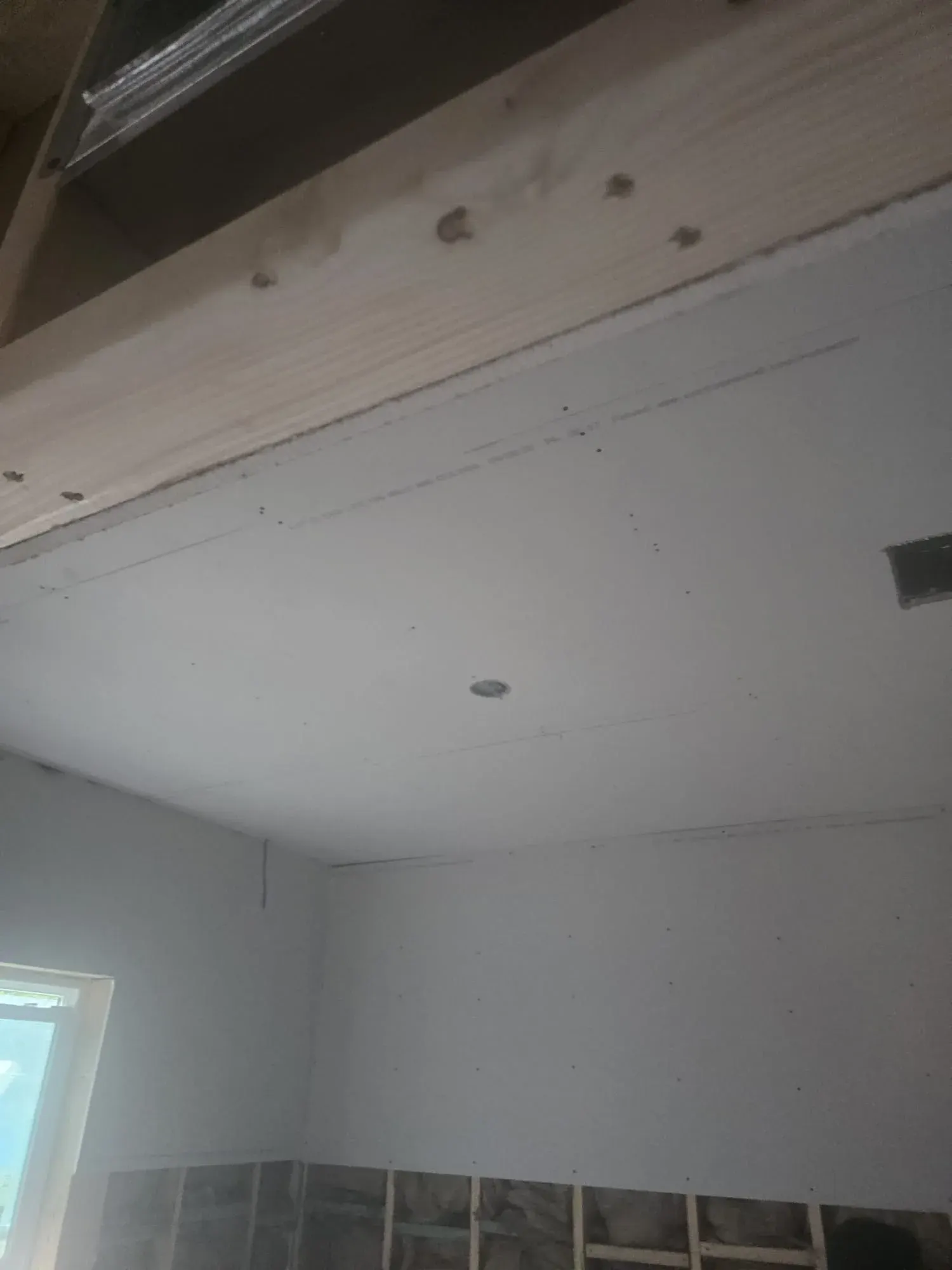
Signs the drywall is past saving
Look for any of these on a wall or ceiling:
Brown or yellow stains
Rings that expand after rain or when the AC runs mean water is still arriving. The board under a stain is usually compromised.
Sagging or bowing ceiling
A ceiling that droops between joists is holding water. It can fall, so keep people out from under it.
Soft or crumbling board
If you can press a finger into the wall, or paper tears away in strips, the gypsum has broken down.
Peeling or bubbling paint
Moisture pushes out through paint and blisters it. Fresh paint will bubble again until the moisture source is solved.
Musty smell
A damp, earthy odor with no visible cause often points to wet board or insulation hidden behind the wall.
Visible mold growth
Dark or fuzzy spots on the surface mean the moisture has been there a while. Small spots can be part of the rebuild; large areas need a remediation company.
How we remove and rebuild water-damaged drywall
Short version: find the edge of the damage, cut past it, rebuild.
- Confirm the source is fixedWe ask what caused it and whether the leak has been repaired. If it has not, that goes first.
- Check moistureA moisture meter shows how far water has wicked past what we can see. The cut line goes beyond the wet area.
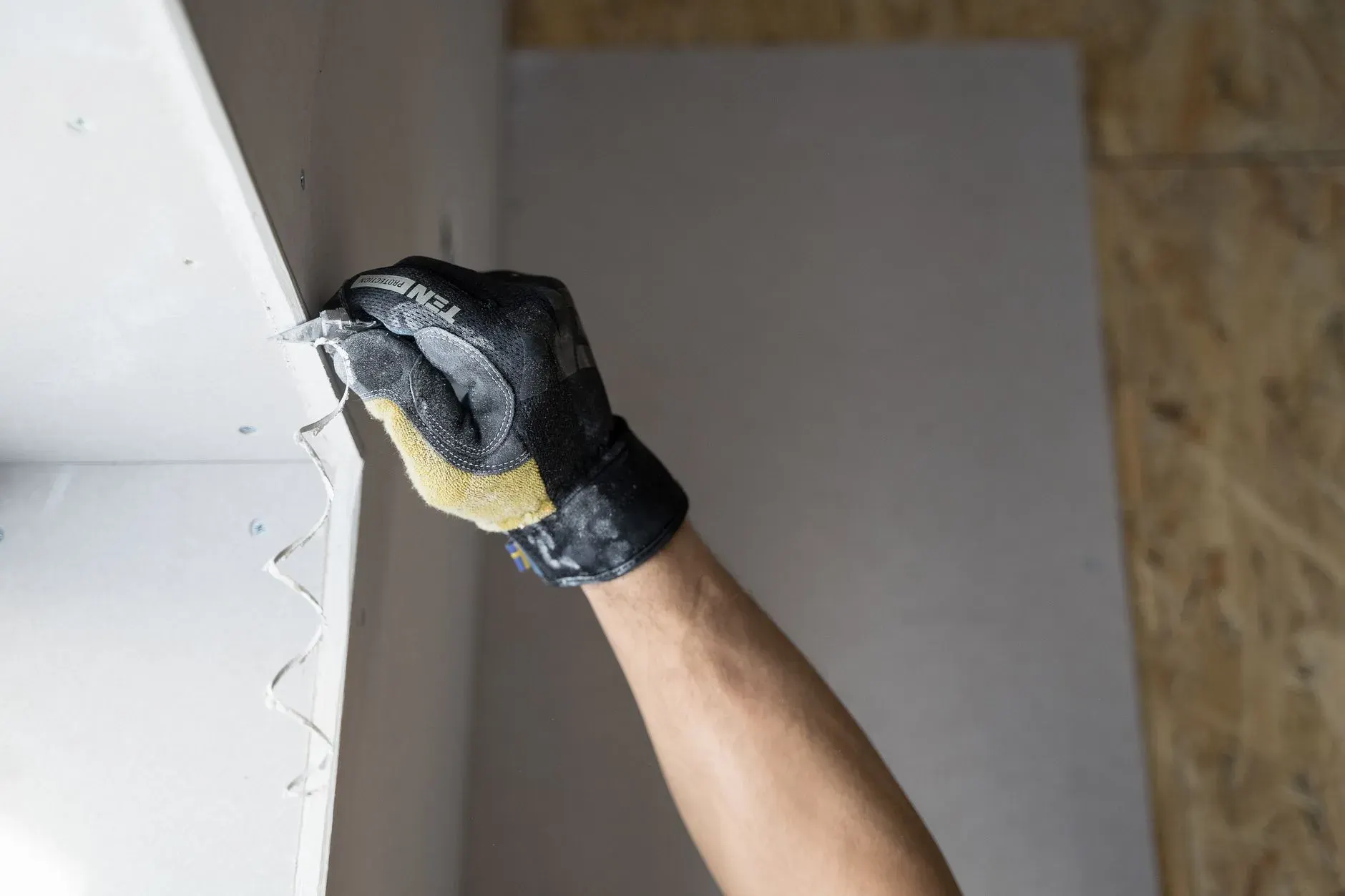
- Cut out the damaged boardDamaged sections are removed in clean lines to framing, along with wet insulation and wet baseboard. The work area is cleared of debris.
- Let the cavity dryFraming and the open cavity need to be dry before new board closes them up. We schedule around drying equipment if it is on site.
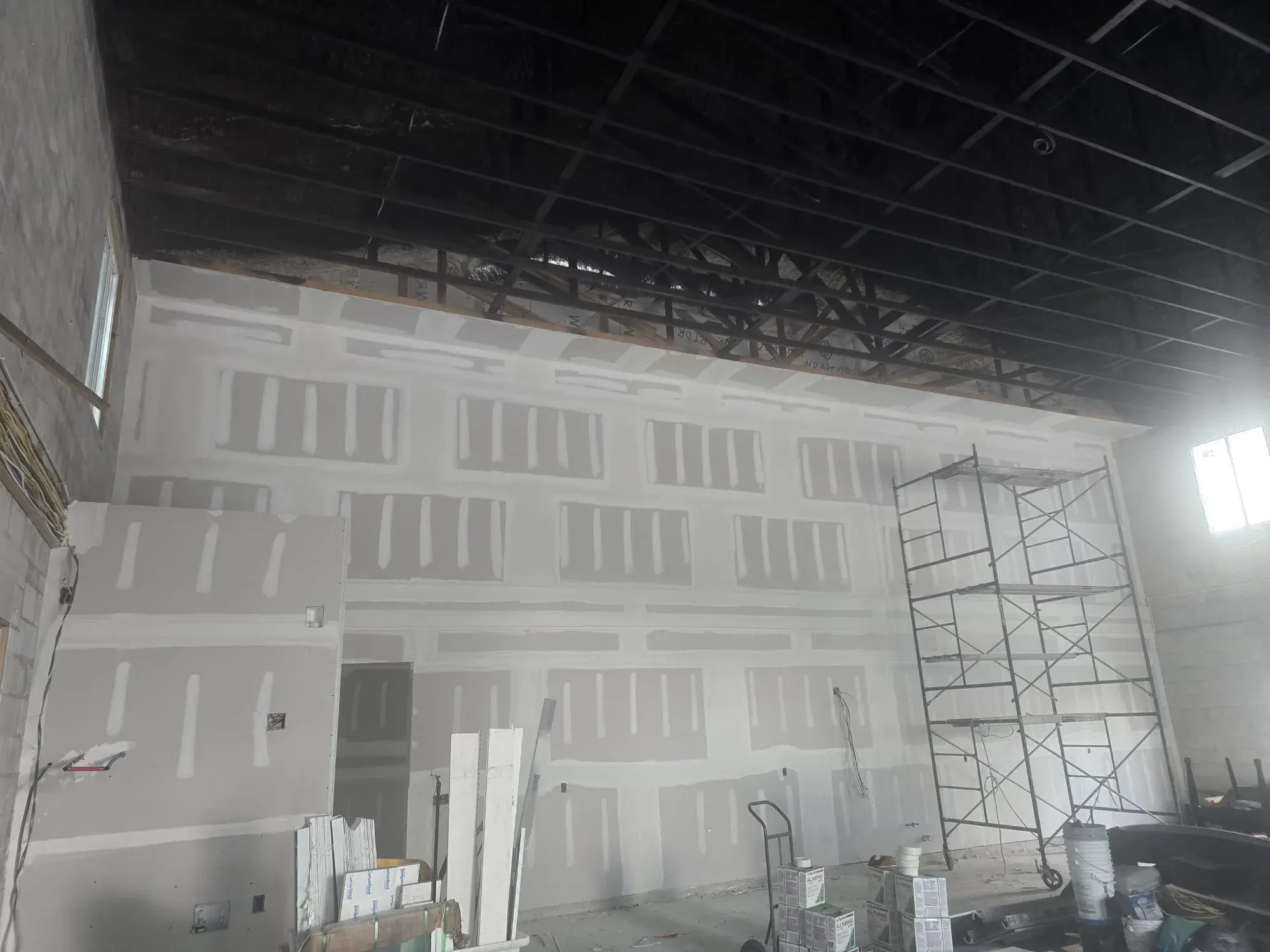
- Hang, tape and finishNew moisture-appropriate board goes in, followed by tape, compound and sanding as in any finish job.
- Texture, prime and hand offWe match the surrounding texture and prime, using a stain-blocking primer on ceilings where old stains were, so the repair is ready for paint.
What drives the price of water damage repair
The visible stain is rarely the true scope. These factors decide the quote:
How far the water traveled
Moisture wicks upward in board and sideways across a ceiling. The real damage area is almost always larger than the stain.
Clean water or contaminated
Flood water and sewage require the affected material to come out entirely; a quick clean-water leak may allow a smaller cut.
Walls versus ceilings
Ceilings need staging, and a heavy wet ceiling is slower to remove safely.
Insulation and framing behind
Wet insulation has to come out and framing has to be checked before closing up the wall.
Finish and texture
Matching knockdown or orange peel over a large rebuilt area takes more time than a plain patch.
Other trades involved
Roofers, plumbers or drying contractors affect the sequence and the date we can close the wall.
Why call us for water-damage drywall work
Fast, clear communication matters here. Call us, describe what happened and where, and we will tell you what we need to see and what to do in the meantime.
We are drywall specialists. The rebuild, finish and texture match are what we do all the time. We will also be honest when a job needs another trade first.
- Drywall is our core trade, so the rebuild and the finish stay with one crew.
- Honest scope: we say when roofers, plumbers or remediation come first.
- English and Spanish for stressful moments (se habla español).
- Based in Lehigh Acres and working across Fort Myers.
Water damage repair in Lee County neighborhoods
We cover Lehigh Acres and Fort Myers, where summer storms, older roofs and the flooding that followed Hurricane Ian keep drywall repair busy. Our Fort Myers page explains the flood-prone areas near the river, and our Lehigh Acres page covers the slab-and-block homes in the east.
Questions people ask us
How fast does mold start growing in wet drywall?
The EPA says mold can begin growing on damp material within 24 to 48 hours, and Southwest Florida's humidity makes that window feel shorter. That is why wet board should be dried or cut out promptly instead of waiting to see if it dries by itself. If the damage is from a leak, stop the leak first.
How high do you cut the wall after a flood?
After flooding, the standard practice is a flood cut, removing drywall to a height above the visible waterline, commonly at least a foot or two, and further if moisture readings show wicking. The cut is made in a straight line so it can be patched or replaced cleanly. Insulation behind the board is usually removed too.
Can wet drywall just be dried and left?
Sometimes, for a brief, clean-water event that is caught quickly. Board that has been soaked for long, has sagged, softened or developed stains and odor is normally replaced. Water from a flood or a sewage backup is treated as contaminated and the affected board should come out.
My ceiling has a brown stain. What caused it?
In Florida homes the usual suspects are a roof leak after the summer storm season, a clogged air-conditioner condensate drain pan overflowing in the attic, or a plumbing leak above the ceiling. The stain only tells you where water ended up, so the source has to be found before the ceiling is repaired.
Do you do mold remediation or water extraction?
Our part is the drywall: removing damaged board and rebuilding the wall or ceiling. Water extraction, structural drying and mold remediation are separate specialties. If your house needs them, we will say so and work with that schedule. Large areas of mold, roughly more than 10 square feet, call for a professional remediation company.
Will the repair match the rest of the wall or ceiling?
That is the goal. After new board is in, it is taped, finished, textured to match the surrounding wall, primed and made ready for paint. For ceilings with a stain, we also recommend a stain-blocking primer before repainting.
Water got into your walls or ceiling?
Call now or describe what happened. Tell us where the damage is, how long it has been wet, and whether the leak is fixed.
- Se habla español: llámenos al (239) 410-4536